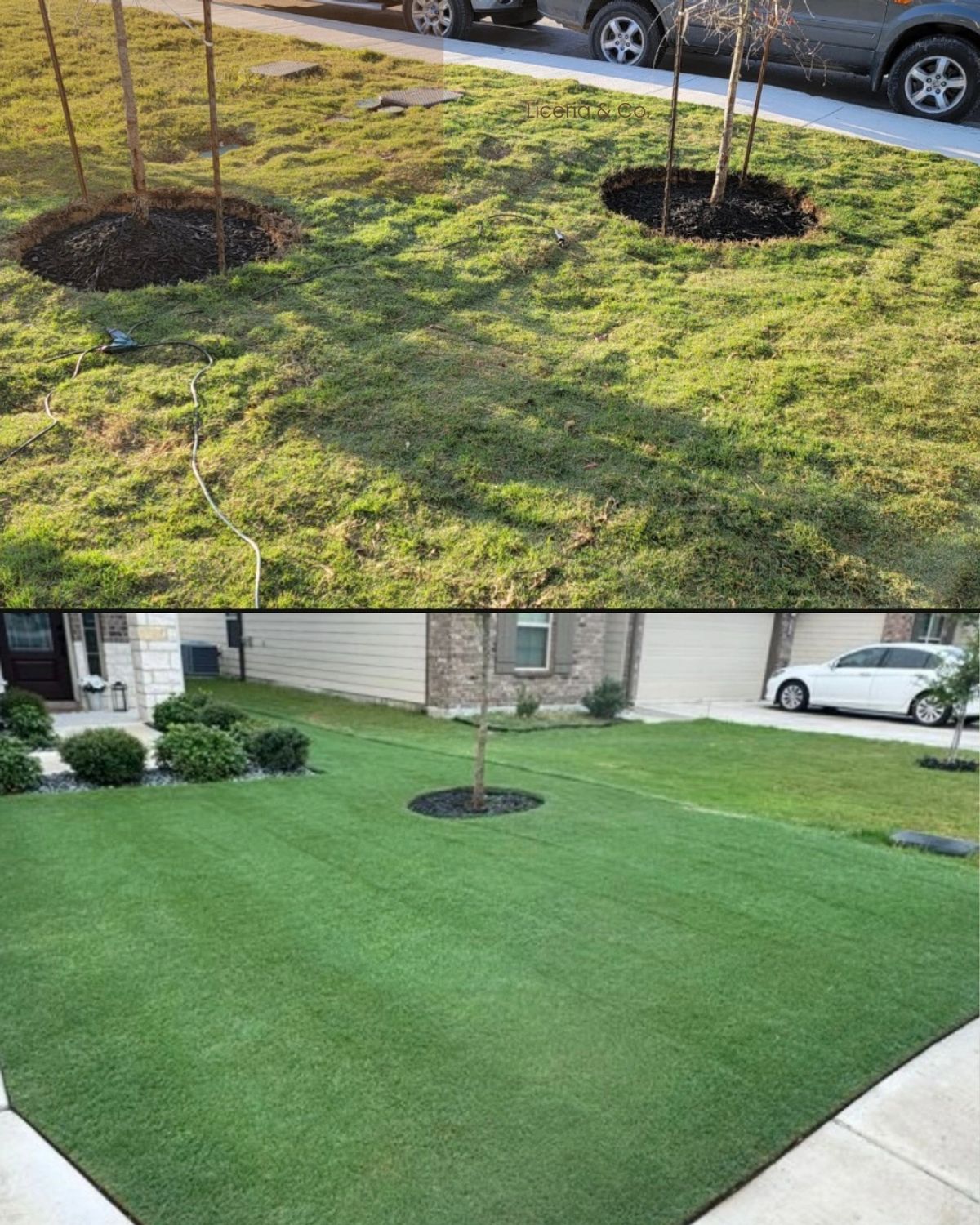
Spring Aeration + Top Dressing New Braunfels: Thicker Grass Fast
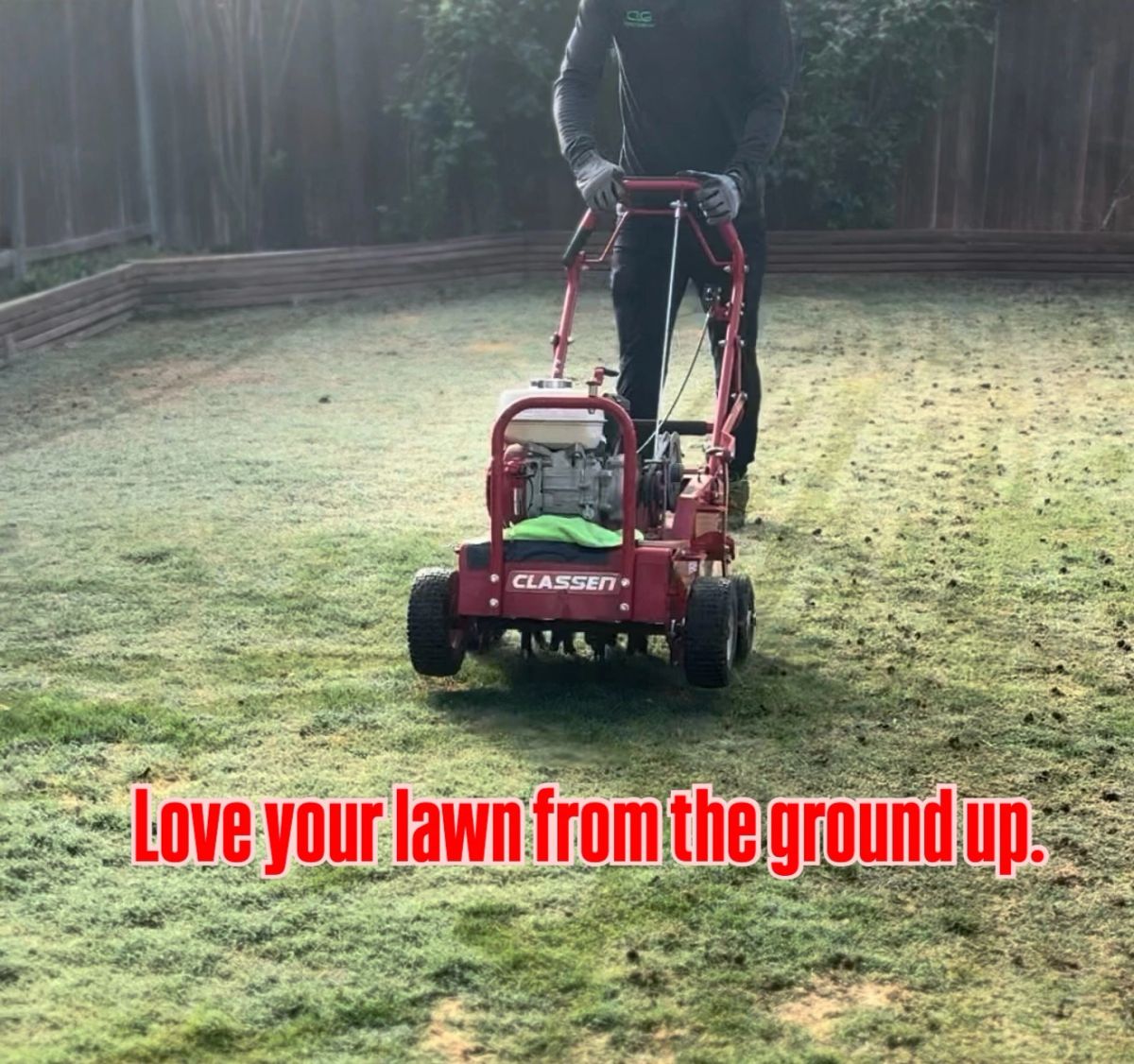
If your New Braunfels lawn looks like it should be thriving but keeps acting patchy, crunchy, or “thin in random places,” here’s the truth: it’s usually not your grass. It’s your soil.
If your New Braunfels lawn looks like it should be thriving but keeps acting patchy, crunchy, or “thin in random places,” here’s the truth: it’s usually not your grass. It’s your soil.
In Central Texas, compacted clay soil can block airflow and keep water from soaking down to the roots so you end up watering and fertilizing… and still getting meh results. Texas A&M AgriLife notes compacted clay reduces air flow and can keep water from soaking to roots.
That’s why spring aeration and top dressing are one of the fastest ways for New Braunfels homeowners to level up thickness and curb appeal, without re-sodding.
The fastest way to get thicker grass in New Braunfels is core aeration followed by a thin compost top dressing when warm-season grass is actively growing in spring/early summer. Aeration relieves compaction and top dressing improves soil structure so water and nutrients actually reach roots.
The Spring Reset, Step by Step
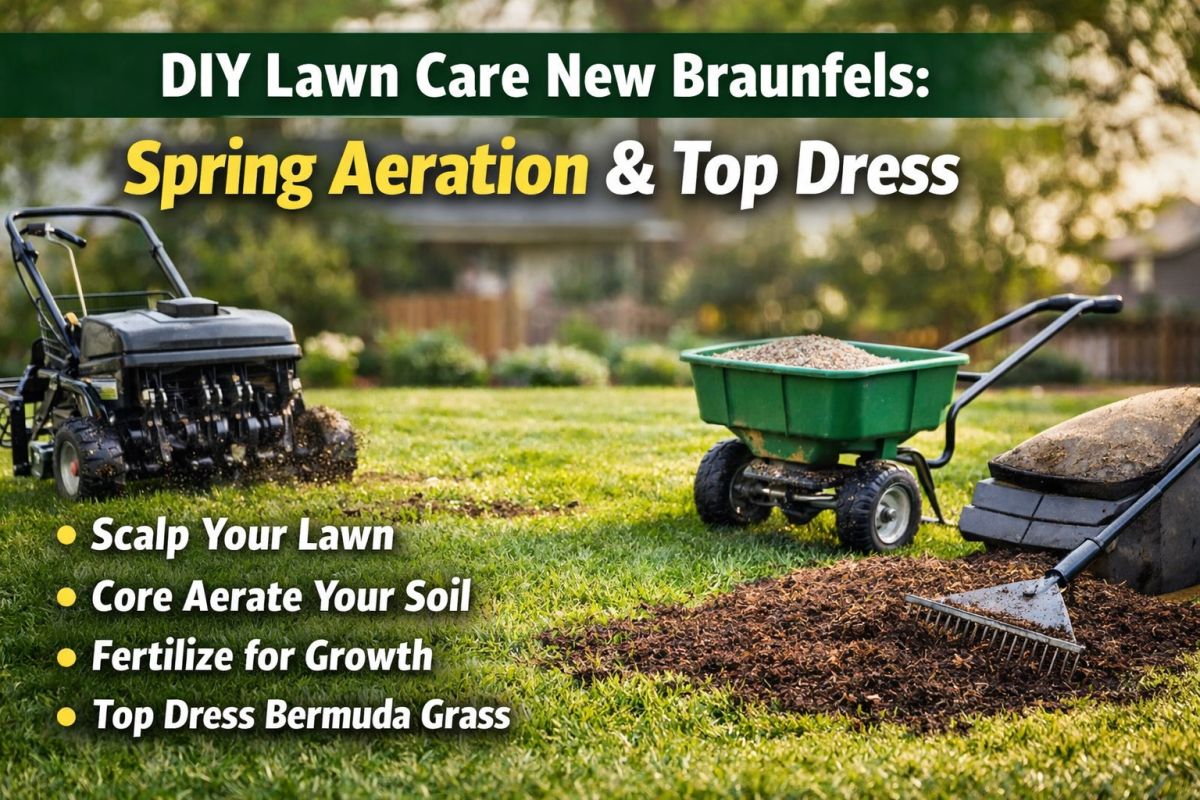
For Bermuda grass in New Braunfels and across Central Texas, the spring steps that matter most are:
- Scalping dormant Bermuda
- Core aeration during early active growth
- Applying fertilizer at the right soil temperature
- Top dressing with a thin soil or sand blend
Each step supports the next and helps nutrients and water move deeper into the root zone.
Step 1: Scalp Dormant Bermuda
Most Bermuda lawns in New Braunfels should be scalped between late February and early April, once the risk of hard frost has mostly passed.
Scalping removes winter buildup and allows sunlight to warm the soil faster, which encourages earlier green-up.
Scalping tips for local homeowners:
- Lower mower height gradually
- Bag or remove clippings
- Do not scalp St. Augustine lawns
- Expect a temporary brown appearance
Step 2: Core Aerate Once the Grass Is Actively Growing
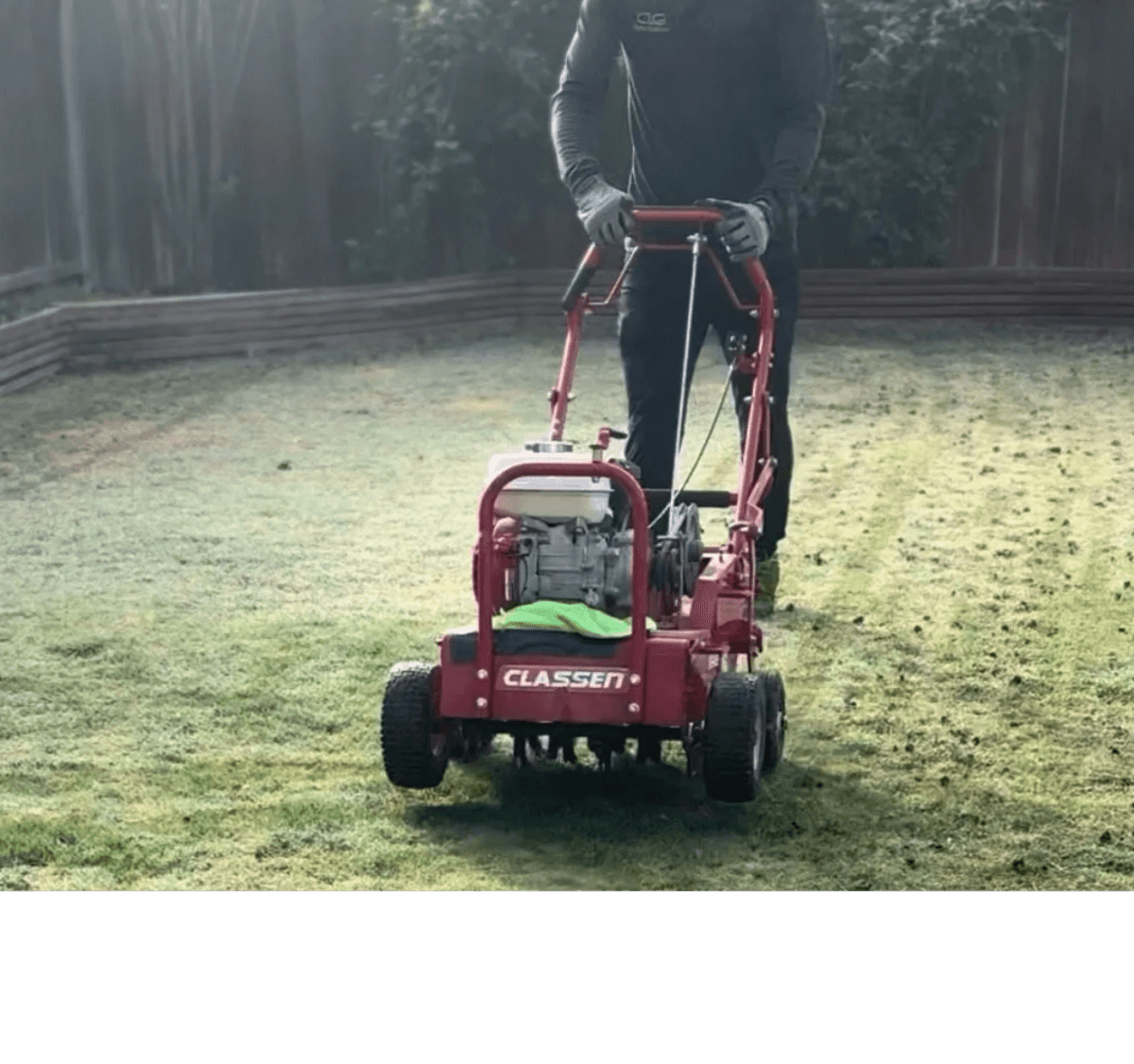
Core aeration removes plugs of soil so air, water, and nutrients can move into the root zone more easily. If you want the full rundown on how it works, what it costs, and how it compares to liquid aeration, see our core aeration guide.
Warm-season lawns (Bermuda and St. Augustine) typically do best with aeration late spring into early summer, when the lawn is fully growing and can bounce back quickly. In New Braunfels, that usually falls between April and early June. If it’s already hot (because Texas), the goal is still the same: aerate when your grass is actively growing and you can keep moisture consistent for recovery.
Tips that make it work (and make it look “pro”)
Do the screwdriver test first. If you can’t push a screwdriver down several inches without a struggle, you’ve got compaction and aeration is worth it.
Moist soil = better cores. Aerate when the soil is damp, not bone-dry and not muddy. Moist soil helps the machine pull clean plugs and reduces turf stress.
Two passes is the cheat code. One pass helps. Two passes (in different directions) is how you get noticeable results, especially in high-traffic areas.
Mark sprinkler heads before you start. This saves you from the most annoying “surprise expense” of DIY aeration. (Also: it’s always the one head you didn’t think was there.)
Step 3: Fertilize After Aeration, Once Bermuda Is Greening
Fertilizer should be applied after aeration once soil temperatures reach about 65 degrees and Bermuda is actively greening. In New Braunfels and surrounding Central Texas areas, this usually occurs between March and May depending on the season.
Best fertilizing practices:
- Use slow-release nitrogen
- Water lightly after application
- Avoid heavy early spring feeding
- Follow label rates carefully
Applying fertilizer after aeration allows nutrients to reach deeper into the root zone.
Step 4: Top Dress With a Thin Layer
Top dressing is a thin layer of compost (or compost blend) that helps improve soil structure over time. Garden Style San Antonio explains compost vs “top-dressing” and notes top-dressing is commonly a compost + sand/loam mix.
The best materials for Bermuda lawns in Central Texas include:
- Compost and sand blend
- Screened topsoil for minor leveling
- Masonry sand for Bermuda smoothing projects
Keep it thin. Top dressing should be a light layer that settles into aeration holes and makes contact with soil, with the grass blades still visible. Too thick can slow recovery.
Compost is a common go-to for improving soil health and structure, especially where clay compacts easily. If you’d rather not haul and spread it yourself, we also do top dressing and lawn leveling.
Don’t Stop Once the Work Is Done
Aeration and top dressing need steady watering and a little patience afterward, or a lot of that effort goes to waste. We cover what to do next in the biggest mistake after aeration and top dressing.
Common Spring DIY Mistakes (the reason people say “it didn’t work”)
- Scalping too early after a freeze
- Aerating dormant Bermuda, before the lawn is actively growing (slow recovery)
- Aerating dry soil (weak cores)
- Only doing one pass (minimal change)
- Fertilizing before green-up
- Top dressing too thick (smothers grass)
- Not adjusting watering for recovery
- Using the wrong mower height
- Damaging sprinkler heads (pain + cost)
DIY vs Hiring It Out in New Braunfels
DIY is doable if you want a weekend project, have the proper equipment, and you’re comfortable handling heavy equipment, doing multiple passes, and spreading top dressing evenly.
Hiring it out usually makes more sense if:
- Your lawn has heavy soil compaction
- Significant leveling is needed
- You want correct timing for Bermuda vs St. Augustine
- You want even, clean top dressing (no smothering) and no sprinkler-head accidents
- You prefer a hands-off approach
Many Central Texas homeowners begin with DIY and later move to professional maintenance once they see how precise Bermuda timing can be.
Want Us to Handle It?
If you want thicker grass without guessing or hauling equipment, Committed Lawn Care can handle spring aeration and top dressing in New Braunfels, built around your grass type, your soil, and the details above.
Call/Text: 512-222-9122
Ask for: Aeration + Top Dressing (Spring Lawn Reset)
Or request a free estimate online.
FAQ
When is the best time for spring aeration in New Braunfels?
For warm-season grass (Bermuda, St. Augustine), aerate when the lawn is actively growing, usually April through early June, so it recovers quickly.
When should I scalp my Bermuda lawn?
Most Bermuda lawns in New Braunfels are scalped between late February and early April, once the risk of hard frost has mostly passed. Don’t scalp St. Augustine.
Should I top dress right after aeration?
Yes. Top dressing after aeration helps material settle into the holes and improves soil structure where roots need it most.
How much compost top dressing should I use?
Keep it thin, enough to contact soil and settle into holes, not bury the grass. “More” is usually the mistake.
Is top dressing necessary every year in Central Texas?
Many Bermuda lawns benefit from periodic top dressing, especially if the soil is compacted or the lawn has minor uneven areas.
What is the best fertilizer timing for Bermuda in New Braunfels?
Fertilizer is most effective once soil temperatures reach about 65 degrees and the lawn has begun actively greening.
Is it worth hiring aeration and top dressing out?
If you want even coverage, correct timing, and no sprinkler damage, yes. It’s one of those jobs that’s “DIY-able” but rarely “DIY-fun.”
Explore Topics
Written by
Committed Lawn Care
Content creator and writer sharing insights and stories.