Should I Hang Christmas Lights on My Two-Story House Myself? An Honest Answer From People Who Climb Roofs for a Living
You can hang lights on a two-story house yourself, and plenty of people do it without drama. But it's a different job than a one-story, and if you don't have a ladder that's actually tall enough,...
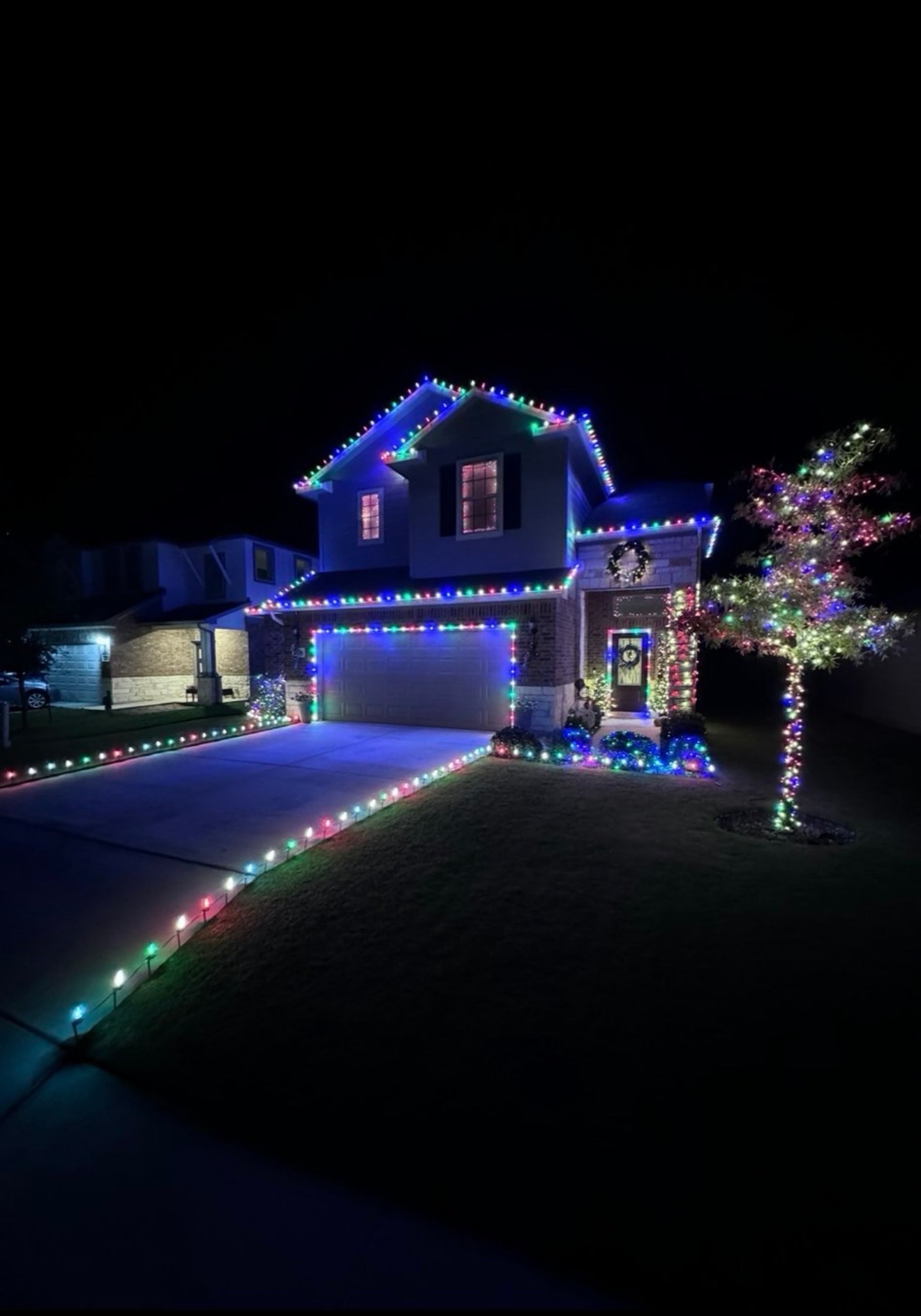
You can hang lights on a two-story house yourself, and plenty of people do it without drama. But it's a different job than a one-story, and if you don't have a ladder that's actually tall enough, a second person on the ground, and a roof you can comfortably stand on, it's worth handing off.
We're not here to talk you off your own roof. We just spend a lot of time on ladders, so here's what actually matters before you climb.
How tall of a ladder do I need for a two-story house?
Taller than the one in your garage, probably. Second-story gutters on a lot of homes sit somewhere around 20 feet up, but measure yours instead of guessing.
The usual rule for extension ladders is that the top should reach about 3 feet past the edge you're working at or stepping onto. The base should sit about 1 foot out from the wall for every 4 feet of height. So a ladder that "just reaches" the gutter is too short.
Also, a ladder's listed length isn't how high you can work. You don't stand on the top rungs, and the overlap between sections eats a few feet too.
What makes a two-story install riskier than a one-story?
Height is the obvious part. The less obvious parts stack up:
- The ground. Flower beds, slopes, soft dirt after rain, and that one spot where the yard dips by the downspout. The feet of the ladder need firm, level ground. If they don't have it, fix the ground or move the ladder.
- Moving the ladder. On a two-story you'll reposition a lot. Every move is a chance to set it up a little worse than last time. Leaning out to reach "one more clip" is how people get hurt. Climb down and move it.
- Your hands. You want three points of contact on the ladder, which is hard when you're holding a strand of lights and a bag of clips. Use a tool belt or a bucket hook so your hands stay free.
- Daylight. Late fall days are short. If you start at 3 p.m. and rush to beat sunset, you're working tired, cold, and in a hurry, which is the worst combo up there.
- Power lines. Look up before you set the ladder. Keep it, especially a metal one, well clear of the lines running into the house.
Is it safe to walk on my roof to hang lights?
It depends on the pitch and the surface. A low-slope roof with dry shingles is one thing. A steep peak is another.
A rough gut check: if you can't stand up straight on it without leaning into the roof or grabbing something, don't walk it. Morning dew, frost, loose shingle granules, metal roofing, and tile all make footing worse than it looks from the ground.
Here's the annoying part. The peaks and gables are usually the lines people most want lit, and they're the hardest to reach safely. Pros working steep sections use fall protection like a harness and anchor. If you don't have that setup, change the design instead of winging it, or hand that part to someone who works on steep roofs regularly. Outlining the lower eaves from a ladder still looks good, and nobody driving by is grading you on the roofline you skipped.
Do I really need someone to hold the ladder?
Yes. A spotter steadies the base, hands up lights so you're not climbing up and down with full arms, and is there if something goes wrong. At the very least, someone should know you're up there and be close enough to hear you.
Two-story ladder work alone is the one corner we'd tell you not to cut.
What should I do on the ground before I climb?
Most of the job happens on the ground. Get this part right and you spend less time up high.
- Test every strand first. Plug them all in on the driveway. Finding a dead strand 20 feet up is a special kind of frustrating.
- Check the gear. Use lights and extension cords rated for outdoor use, and toss anything with cracked or frayed wire.
- Use plastic clips. Gutter and shingle clips hold lights without nails or staples, which can damage the roof and the wiring.
- Plan the run. Know where your outdoor outlet is, how the strands connect, and how many feet each side of the house needs. Measure the eaves so you're not one strand short at the corner.
- Use a GFCI outlet. Most outdoor outlets already are. If yours isn't, sort that out first.
- Clear a path for the ladder. Overgrown shrubs against the wall make it hard to set a ladder at the right angle. Here's what's safe to trim this time of year.
- Load up once per ladder spot. Take everything you need for that section in one trip.
When should I hand it off?
The honest list:
- Your design needs someone walking a steep section.
- Your ladder isn't tall enough, or it feels wobbly to you.
- You don't have anyone to spot you.
- Last year's install was a white-knuckle situation.
- You'd just rather spend that Saturday literally anywhere else. Also a valid reason.
That's where our Christmas light installation comes in. We install the lights you already own, including on two-story houses and steep roofs, peaks and gables too. We don't sell or store lights, so you keep your strands, your colors, and your setup, and our guys handle the ladder and the roof.
If you're on the fence, text a photo of the front of your house and the lights you have to 512-222-9122, and we'll take a look and tell you honestly what we'd do.
Explore Topics
Written by
Committed Lawn Care
Content creator and writer sharing insights and stories.