St. Augustine or Bermuda: Which Grass Actually Survives a New Braunfels Summer?
Bermuda is the tougher survivor in full sun and drought: it can go dormant during a dry stretch and bounce back, while St. Augustine needs more water to stay healthy through a New Braunfels...
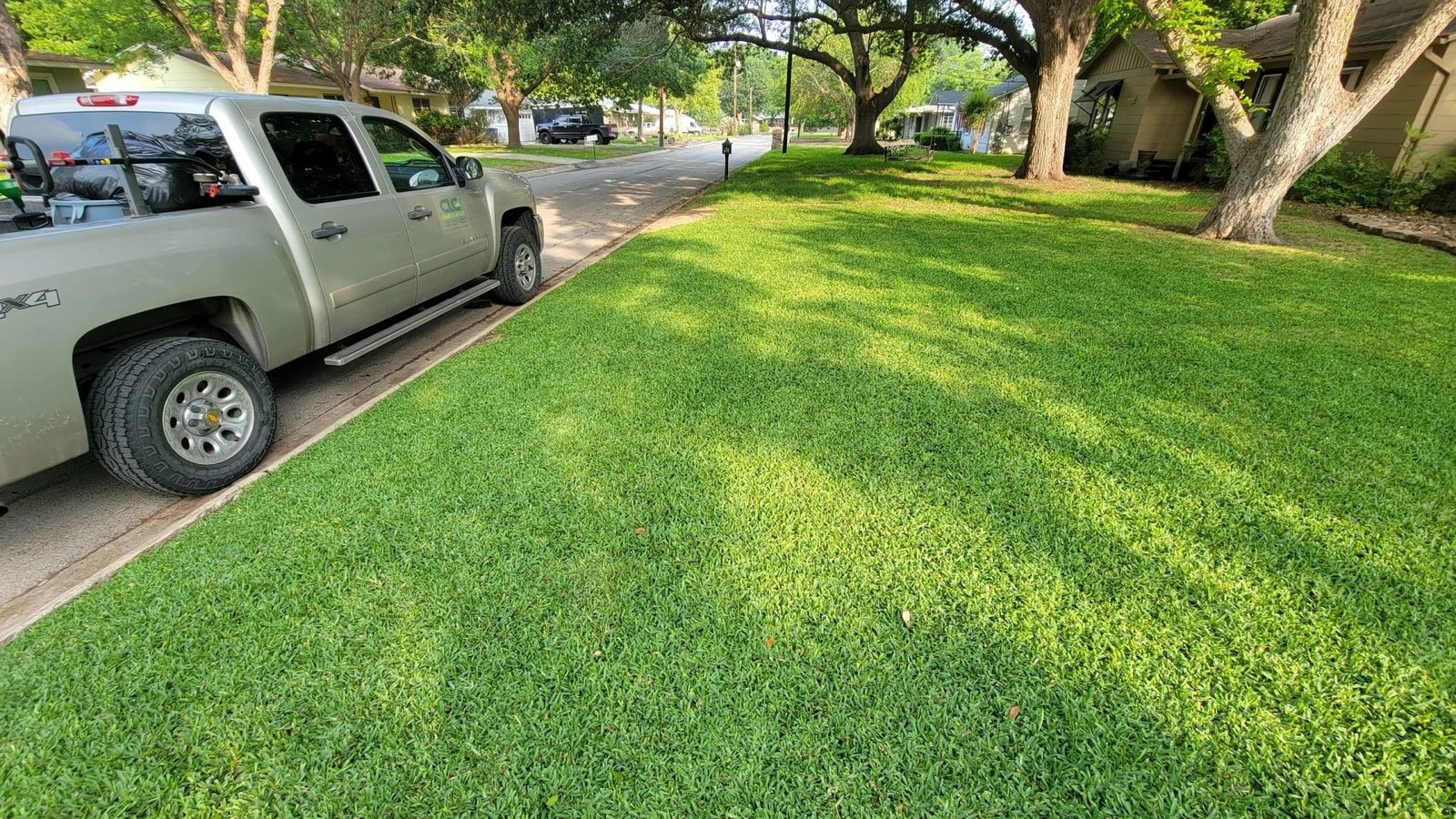
Bermuda is the tougher survivor in full sun and drought: it can go dormant during a dry stretch and bounce back, while St. Augustine needs more water to stay healthy through a New Braunfels summer. But St. Augustine handles shade much better, so if your yard has big oaks or pecans, Bermuda will struggle no matter how tough it is.
So the real answer is that the "right" grass depends on your yard more than on the grass. Here's how they stack up.
Which grass handles drought better?
Bermuda, pretty clearly. Texas A&M AgriLife Extension's turfgrass selection guide rates St. Augustine as less drought tolerant than Bermuda. When water runs short, Bermuda can go dormant and turn brown, then green back up once it gets rain or irrigation.
St. Augustine has moderate drought tolerance. It needs more supplemental water to stay healthy in summer, and a stressed St. Augustine lawn is also more likely to get hit by chinch bugs, which love hot, dry grass. (Here's how to tell chinch bugs from other brown spots.)
If your summers usually involve watering restrictions and you'd rather not fight them, that counts for a lot.
Which grass grows better in shade?
St. Augustine, and it's not close. AgriLife's St. Augustinegrass guide calls it the most shade-tolerant warm-season grass, though it still needs roughly 4 to 6 hours of light a day.
Bermuda has very little shade tolerance. It wants full sun. Plant it under a big live oak and it'll thin out until you mostly have dirt and weeds.
A lot of New Braunfels yards have both: full sun out front, heavy shade in the back. That's part of why mixed lawns are so common here.
Which one holds up better to kids and dogs?
Bermuda. It's fine-textured and spreads aggressively by both above-ground runners and underground stems, so it recovers from wear quickly. That's why you see it on sports fields.
St. Augustine spreads by above-ground runners only and is slower to recover once it's worn down to bare spots. A dog's favorite running path along the fence can stay bare a long time.
Which grass is lower maintenance?
They're both work, just different kinds.
Bermuda:
- Mowed shorter and more often during the growing season
- Creeps into flower beds and cracks in the driveway, so edging matters
- Needs full sun to stay thick
- Often scalped at spring green-up to clear out the dead layer and help it come back evenly
St. Augustine:
- Mowed taller and a little less often
- Needs more water in summer
- More prone to chinch bugs, large patch in fall and spring, and thatch buildup
- Sensitive to some common weed killers, so you have to read labels carefully (more in how to kill weeds without killing St. Augustine)
- Shouldn't be scalped hard the way Bermuda can be
If you want the lowest-water option for a sunny yard, Bermuda usually wins. If you want something that looks decent under trees, St. Augustine usually wins.
Can I plant seed, or do I need sod?
Bermuda can be planted from seed or sod. St. Augustine is planted as sod or plugs, since seed isn't really a practical option for it.
Timing matters for both. AgriLife recommends planting warm-season grasses during warm months when they're actively growing, ideally late spring to early summer, so roots have time to settle in before winter.
Which one handles a hard freeze better?
Bermuda generally handles cold better. AgriLife notes St. Augustine can suffer winter-kill in some parts of Texas, especially when it's newly planted or already stressed going into winter. Both go dormant and turn brown in winter, so tan grass in January doesn't automatically mean it's dead.
What if my yard already has both?
Very common, and mostly fine. In sunny areas, Bermuda tends to creep into St. Augustine. In shady areas, St. Augustine tends to hold its ground.
If you're trying to keep one out of the other, it's a long game. There's no easy spray that removes Bermuda from St. Augustine without damage. Most people end up living with a mix, or redoing a section with the grass that fits that spot's light.
So which one should I pick?
Quick version:
- Mostly full sun, high traffic, want to use less water: Bermuda.
- Mature trees and real shade: St. Augustine.
- Some of each: Consider which part of the yard matters most to you, or match grass to each area.
Whichever one you have, the basics decide whether it survives the summer more than the grass type does: mowing at the right height, watering deeply and less often, and keeping the ground level so water doesn't pool in one spot and run off another. Our crew handles mowing, leveling, top dressing, and scalping for lawns around New Braunfels.
If you're not sure what you've got growing now, or which grass makes sense for your yard, text a photo to 512-222-9122 and we'll take a look.
Explore Topics
Written by
Committed Lawn Care
Content creator and writer sharing insights and stories.